
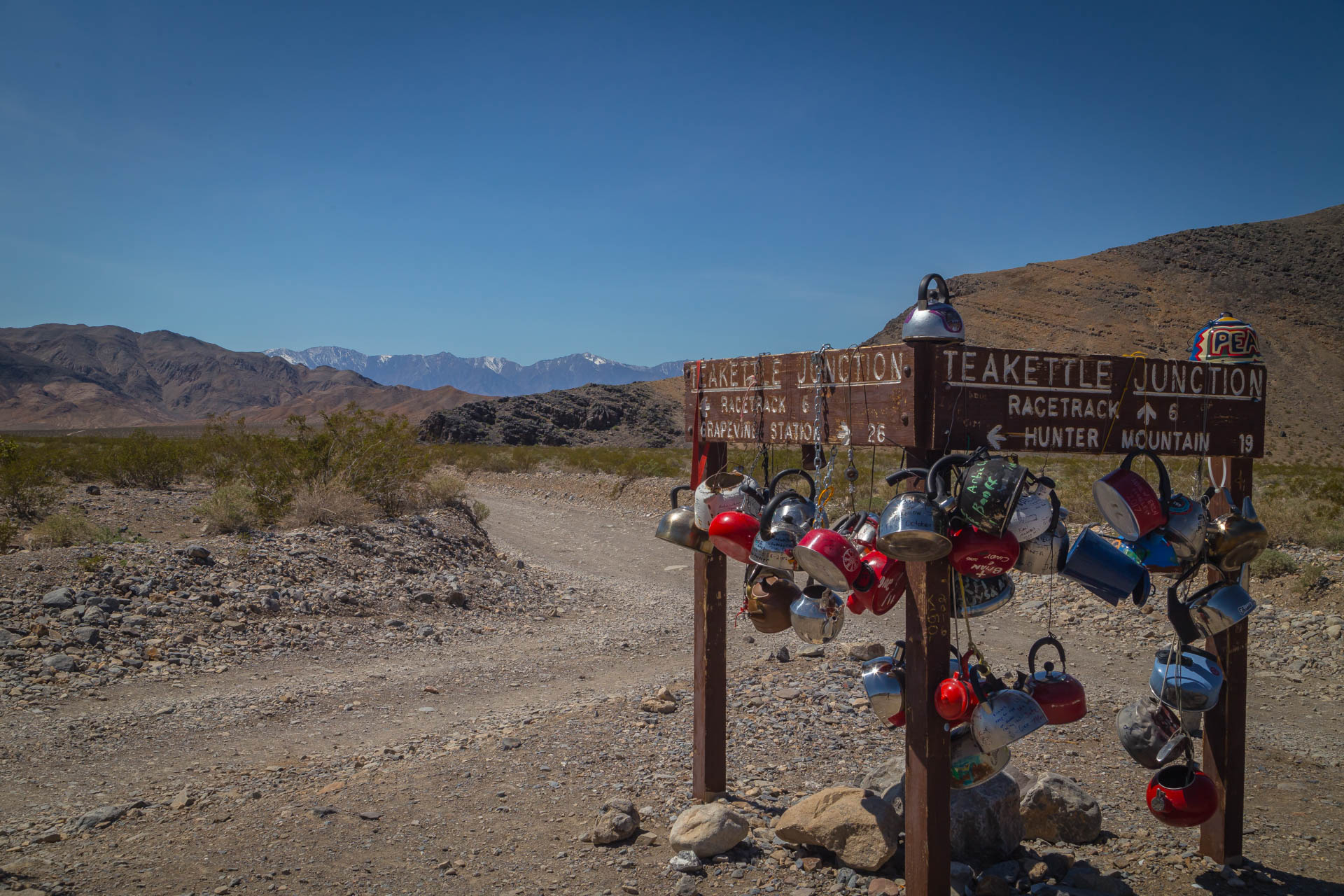
After photographing at the Mesquite Dunes in the morning we drove to the “Land of the moving rocks”. From Furnace Creek, CA in Death Valley National Park you drive north 57 miles to the Ubehebe Crater (you-bee-he-bee). Take a right on Racetrack Valley Road and drive 27 more miles down a wash board gravel road, past Teakettle Junction, 6 more miles and you are there.
Our adventure began with the racetrack playa photography trip, where we aimed to capture the unique landscapes.
The racetrack playa photography trip offers a mesmerizing view of nature’s artistry, particularly during the golden hour.
During our racetrack playa photography trip, we discovered the intriguing phenomena of the moving stones.
The Racetrack Playa is a flat, desert basin near the north end of Death Valley National Park. It sits at 3700 feet in elevation, so it is cooler than Death Valley proper. In late March, when we were there, it was 93 in Furnace Creek. At the Racetrack it was in the mid 70’s. The playa is surrounded by rocky hills and, hundreds of years ago, was filled with water, but these days it’s just a dried up lake bed. The surface of the playa is almost as hard as concrete and is home to the “sailing stones” that move along the playa on their own.
It took until 2014 for scientists to conclusively uncover how the stones get from one place to another. They found that, due to an unusual and unique combination of ice, wind, and sun the rocks move. Rocks roll off of the hillside, on the south east side of the playa, then “sail” across the playa, pushed by the wind. Thinking I didn’t want to be somewhere the wind blows hard enough to move rocks, I was hesitant to explore this unique site, but then I learned more. This discovery significantly enhanced our racetrack playa photography trip experience.


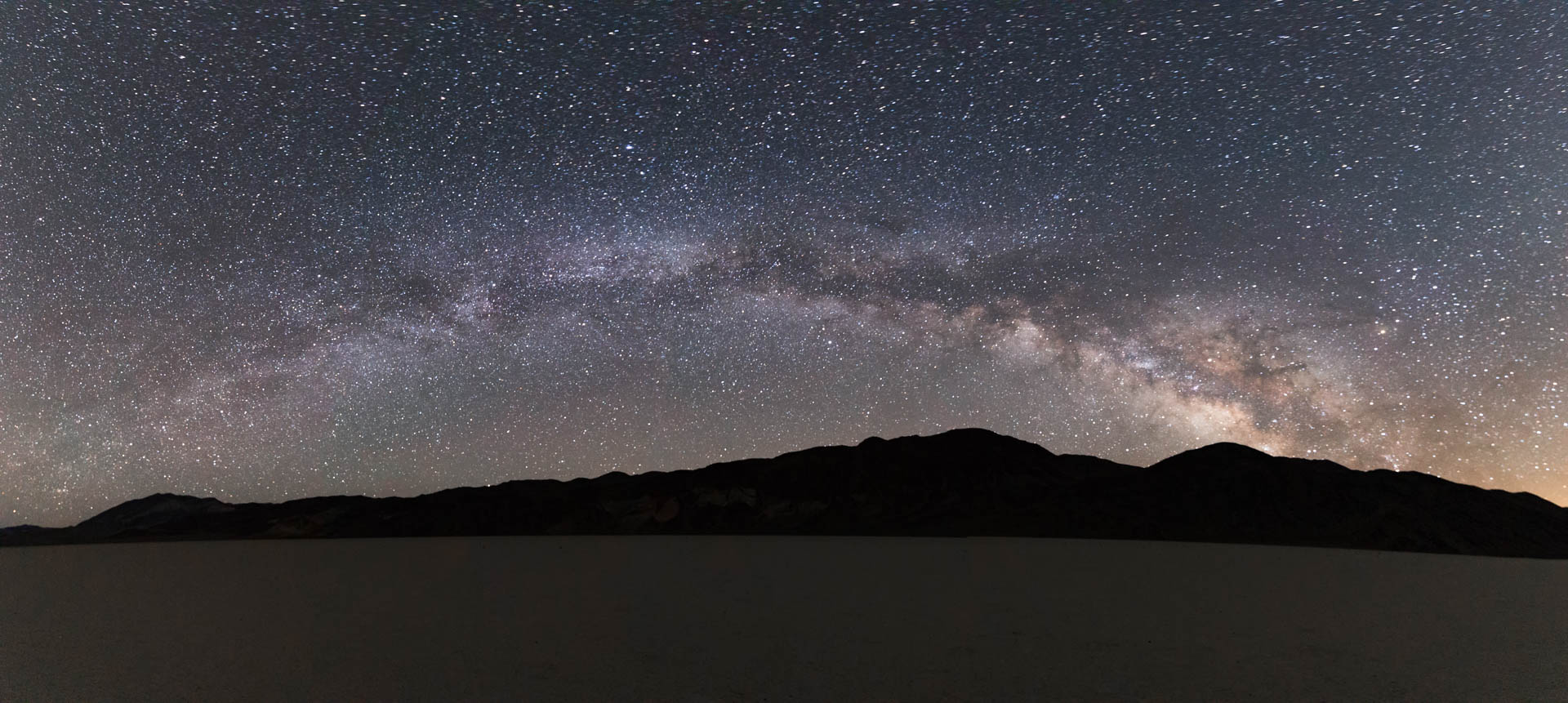
We drove to the Racetrack one afternoon and explored to find the “best” rocks. After an early dinner, we waited for the sun to get lower in the sky. The sun disappears quickly behind the mountains and the shadows race across the playa. We spent the night near the playa at a dry camp. About 2:30 am we awoke and went back out onto the playa for some night images. The one below is a panorama of the Milky Way. There are a lot of dark skies in Death Valley National Park, but Las Vegas is still a glow on the horizon.
Capturing the Milky Way during the racetrack playa photography trip was a highlight for me.
Reflecting on the racetrack playa photography trip, we felt grateful for the experience. The memories from our racetrack playa photography trip will last a lifetime.
Next up: Lee Flat in Death Valley National Park
Previous: Mesquite Dunes & Stovepipe Wells

