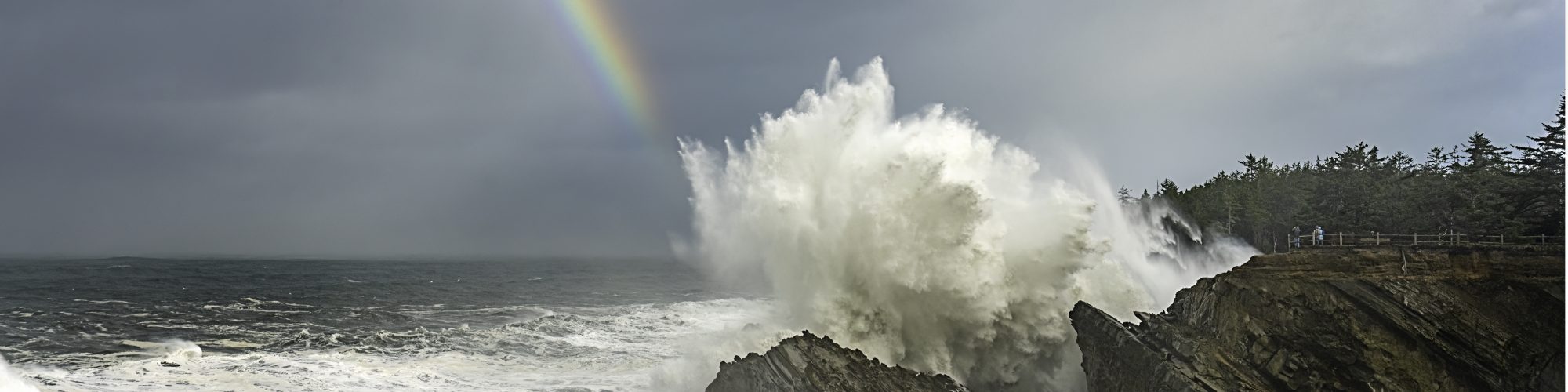
If you want to see big waves, and crashing surf, forget “King Tides”. Look for high waves in the ocean forecast.
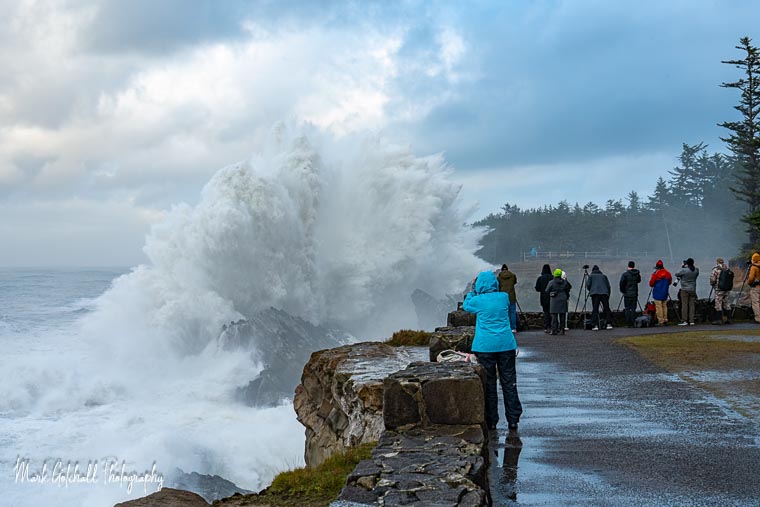
Bear with me and I will explain what you need to do to see big waves and crashing surf along the Oregon and Washington Coasts. First an explanation of tides, why they occur, what causes high tides and what causes large waves.
Tides
“King Tide” is a non-scientific term some people use to describe exceptionally high tides. Here in Oregon, King Tides occurrences are promoted to increase tourism at the beach during the winter. Tides are actually long-period waves that roll around the planet as the ocean is “pulled” back and forth by the gravitational pull of the moon and the sun. These sun and moon interact with the Earth in their monthly and yearly orbits. Don’t imagine tides as waves, since the time between high and low tide is over 6 hours. There are normally two high tides per day, If today the first high tide was at 6 am, the next day’s first high tide is about 1 hour around 7 am.
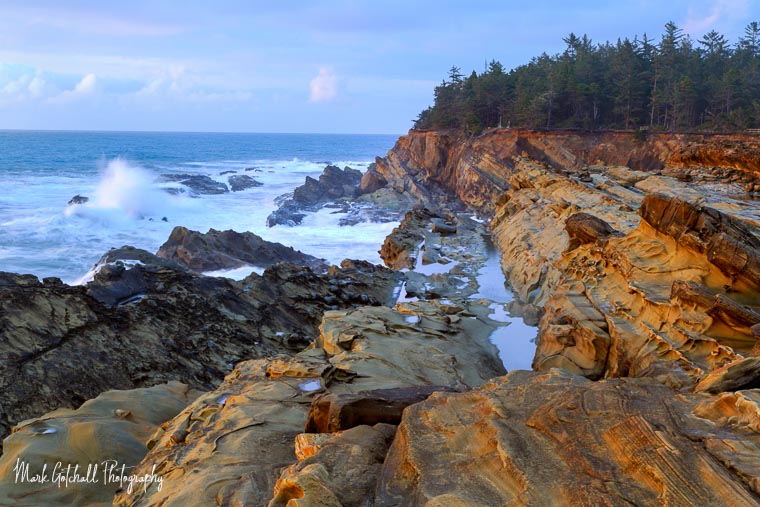
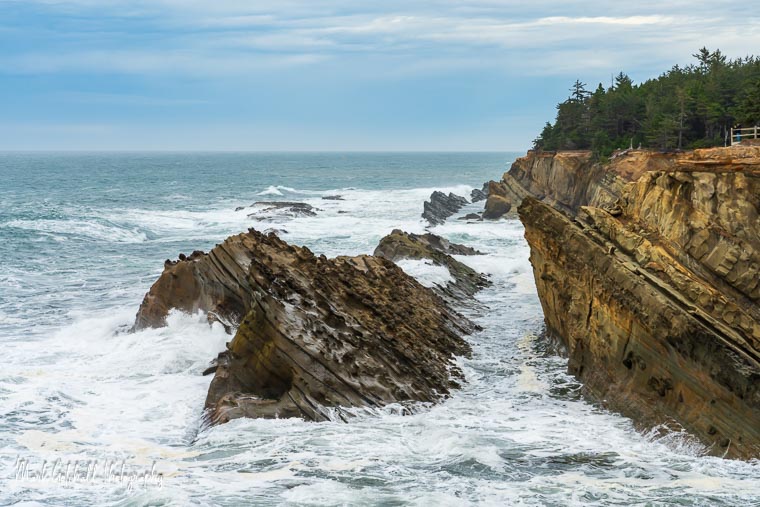
Full or New Moon + Perigee
Higher than normal tides typically occur during a new or full moon and when the Moon is at its perigee — the point when the moon is closest to the Earth. This typically occurs between 3–5 times each year. These occurrences are often called ‘perigean spring tides.’ A spring tide—popularly known as a “King Tide”—refers to the ‘springing forth’ of the tide during new and full moon. Winter “King Tides”: The most extreme spring tides, and usually occur in November, December, and January. Spring tides, in Oregon, are up to 2 feet (0.61 m) higher than a neap tide.
Seven days after a spring tide, the sun, and moon are at right angles to each other. When this happens, the bulge of the ocean caused by the sun partially cancels out the bulge of the ocean caused by the moon. This produces moderate tides known as neap tides, meaning that high tides are a little lower and low tides are a little higher than average. Neap tides occur during the first and third quarter moon, when the moon appears “half full.” High tide during a neap tide period are about 2 feet (0.61 m) lower than the peak of a spring tide. However, a high tide during a full or new moon, that is not a spring tide, may only be 1-1.5 feet different.
It’s also important to note that other factors influence the height of the tide as well. Onshore winds, which are blowing toward shore, will push the tides further inland or up the beach.
Waves
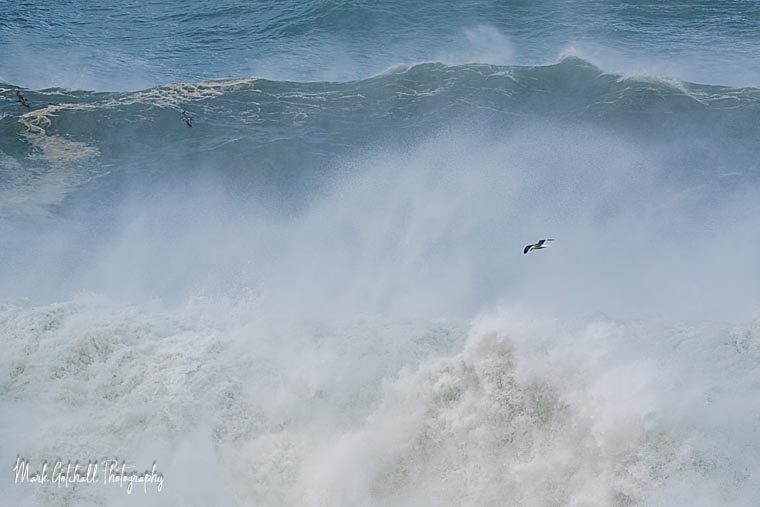
The most common waves are surface waves. These are caused by wind blowing along the air-water surface, creating a disturbance that steadily builds as wind continues to blow and the wave crest rises. The higher the wind, the larger the waves. Wind waves become swells when the wind dies down or combines with the swell to become a higher wave. Surface waves are the waves you see at the beach under normal conditions.
Adverse weather or natural events often produce larger and potentially hazardous waves. Waves are regularly formed by storms hundreds of miles offshore. Close to the shoreline, the actual height of a wave is influenced by the shape of the sea bottom. Severe storms moving inland frequently create a storm surge, a long wave caused by high winds and a continued low pressure area. Storm surges and spring tides do not create a typical crashing wave but rather a rise in sea level upon reaching shore.
One great tool for wave height and wind prediction is Windy.com. You will need to adjust some settings, such as meters to feet, and chose from many options for what you want to display. They also have an App for phones.
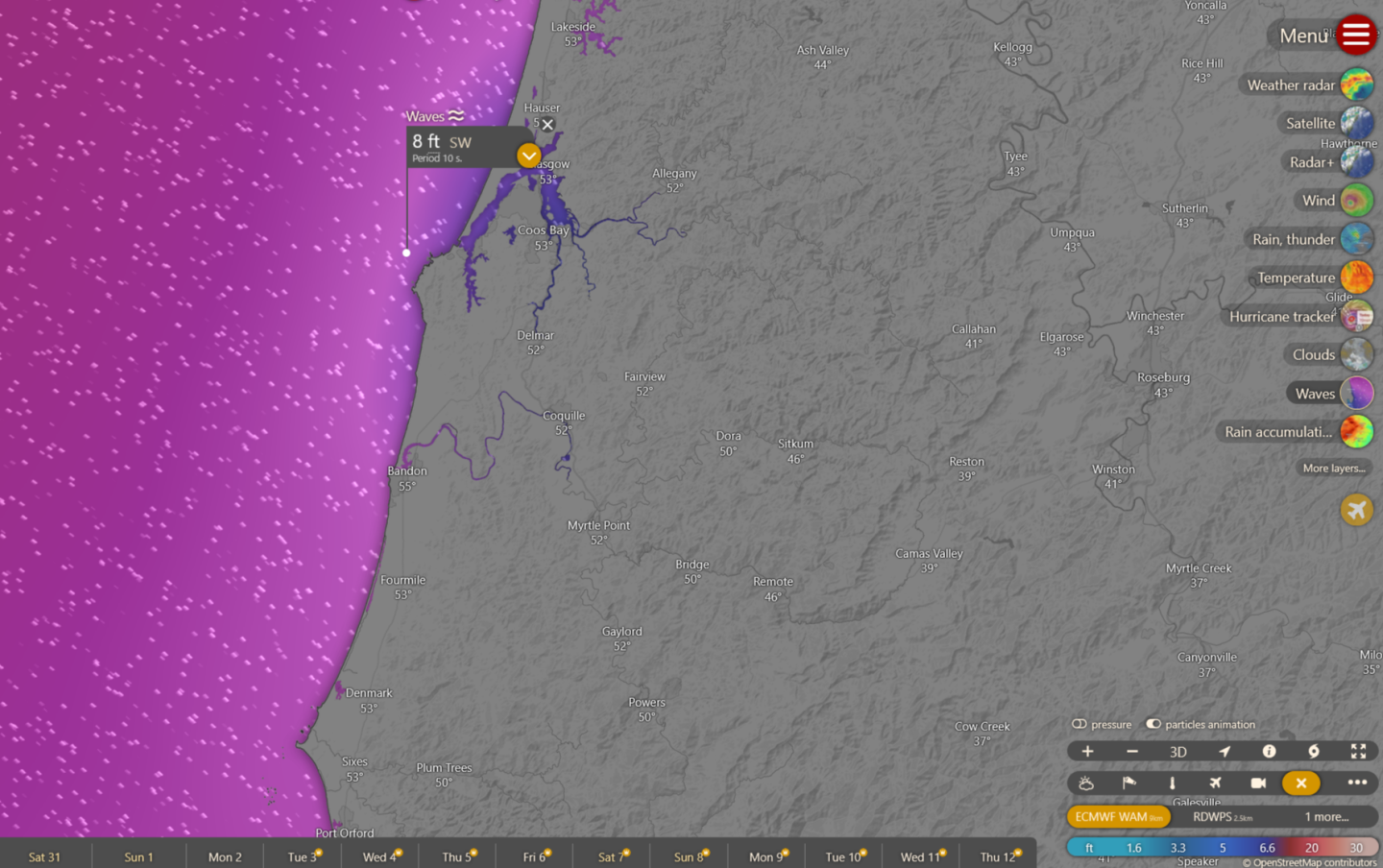
In the image above, I select “Waves” from the menu, which is the significant wave height and its period, that is all wave types combined (swell and wind waves). Then click your cursor on the area you are looking at going to. The marker above is just off Cape Arago and Shore Acres Park near Coos Bay, Oregon. You can use the slider, at the bottom, to change the date and time of the forecast. The waves at this date and time are forecast to be 8 ft (2.44 m) high with a 10-second interval between waves, as displayed on the “flag” above the selected spot. Wave height is also color coded, and you can easily see where the waves are higher or lower by the different colors. You can get forecasts that are further out, if you join the Premium Plan.
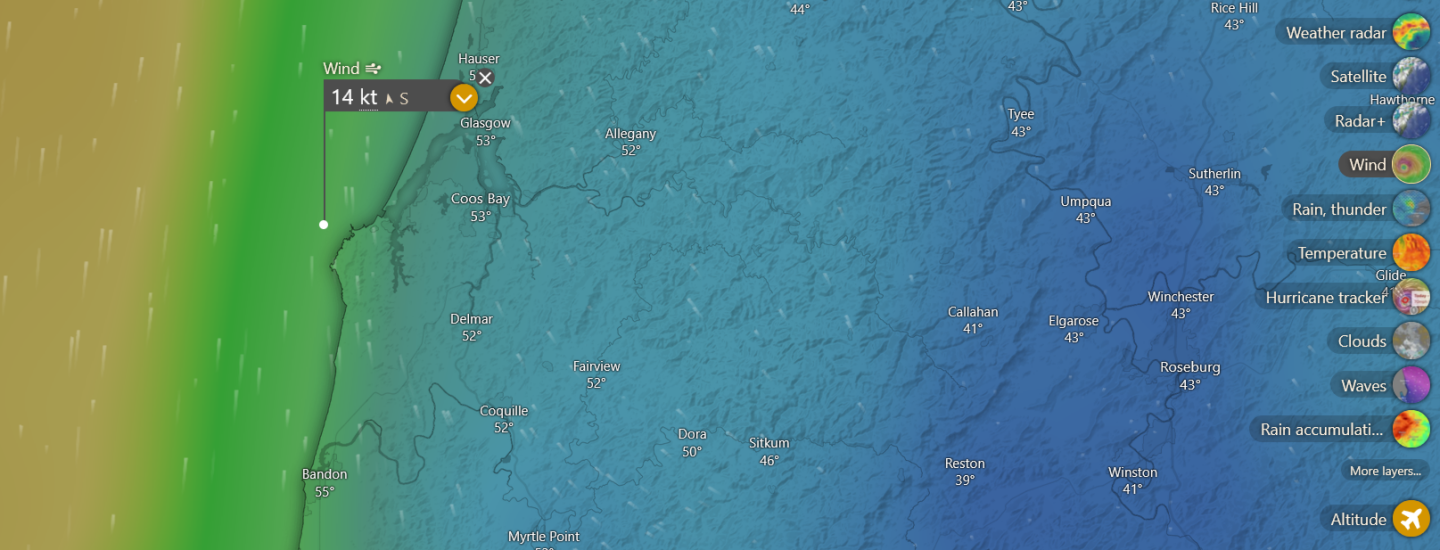
I also select “Wind”, which is the average wind speed 10 meters off the ground. I usually don’t pay that much attention to the wind gusts, just know there will be gusts of wind that are higher than the average. This tells me how much mist will be in the air, or how far the spray from the wave will blow. I try to avoid going when the wind is higher than 15 knots (over 17 mph (ca. 27 km/h). If it is blowing off the wave tops the wind is likely over 17 knots. There is too much salt water in the air and spray to keep my camera equipment dry.
Now, let’s compare wave heights for “King Tides” versus Normal tides. If you are going to the beach during a “King Tide” at high tide, the tide will only be about 1–2 feet higher than a “normal” high tide. This really does not create breaking waves without significant wave heights. Now looking at wave height, a 17-foot wave will create much higher crashing waves than an 8-foot wave, because the waves, in the open ocean are 9 feet (2.74 m) higher.
Again, close to the shoreline, the actual height of a wave is influenced by the shape of the sea bottom. However, a slow moving tide that is 2 foot higher does not create crashing waves with 8-foot waves however, a 17-foot wave will create much higher waves than an 8-foot wave, even at the peak of a “King Tide”.
Here are a couple of short videos taken with my phone at Shore Acres State Park, near Charleston, Oregon. The first one is 8-foot waves rolling in, the second one is 17-foot waves rolling in.
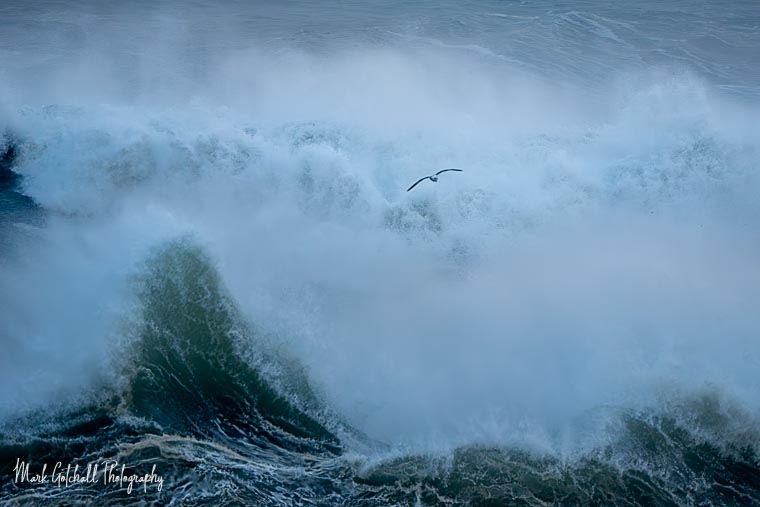
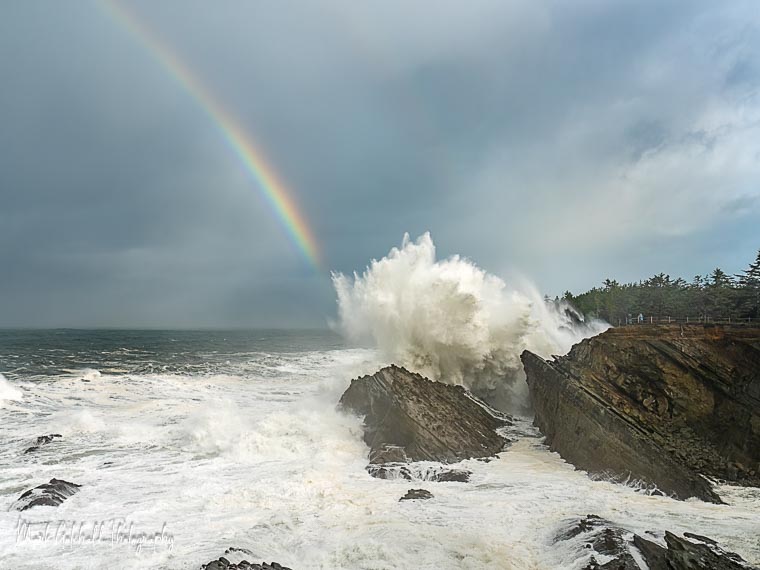
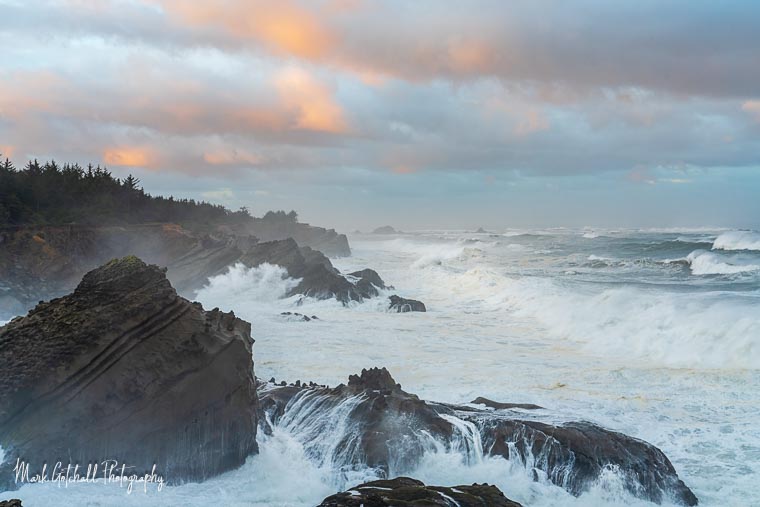
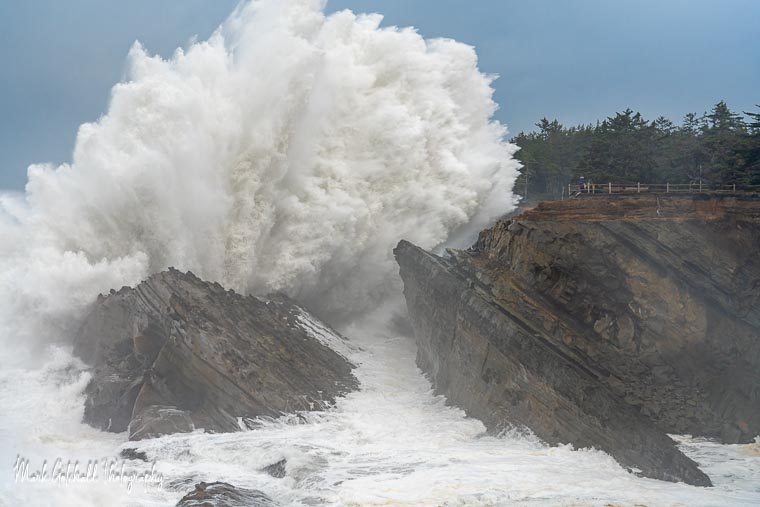
The images below were shot when the waves were 17 foot.
Previous Post: March in Joshua Tree National Park

